


What Is Shop Drawing? Importance in Interior Design & Construction
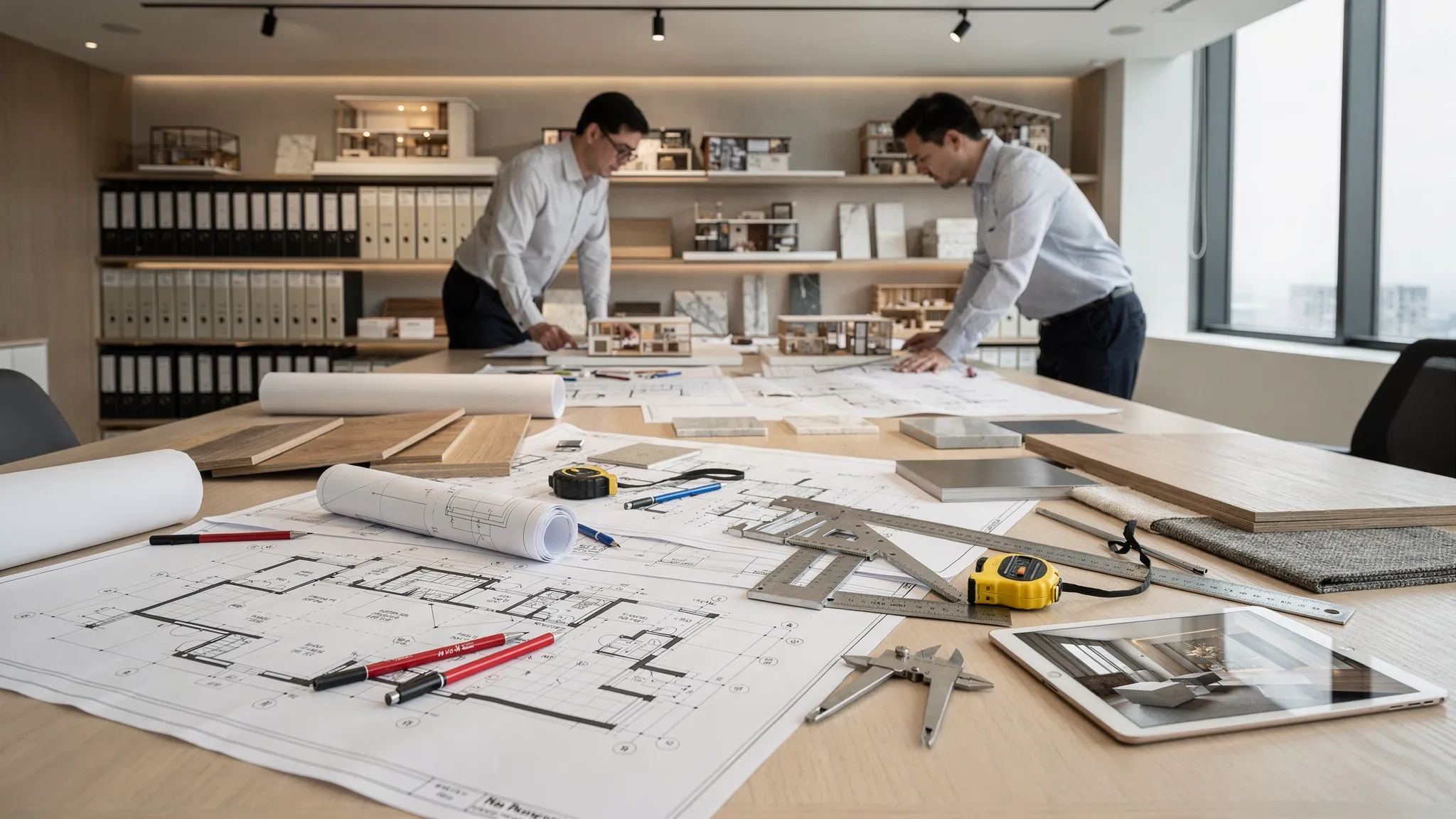
What is shop drawing? A shop drawing is a detailed technical drawing that shows exactly how a specific part of a building or interior will be made, assembled and installed. It turns the designer’s idea into clear instructions that fabricators, site teams and contractors can follow. In interior design and construction, shop drawings sit between the approved design and the real work on site. They include dimensions, materials, fixing details, sections and coordination notes that help reduce mistakes before installation begins. This article looks at shop drawings from a practical Dubai fit-out perspective, especially for homes, hotels, restaurants, offices and other high-detail spaces where accuracy directly affects the final result.
What Is Shop Drawing in Construction?
In construction, a shop drawing is the working-level version of a design detail. It explains how an element will be fabricated or installed after the architect, designer or consultant has issued the main design drawings.
Why are they called shop drawings? The term comes from the “shop” or workshop where items such as cabinetry, metalwork, doors and furniture were manufactured. Today, the term is used across interior design, civil engineering, architecture and MEP work because many building elements still need specialist preparation before installation.
For a luxury fit-out company such as Eminent Interiors, shop drawing preparation is part of turning creative design into buildable reality. A beautiful concept is not enough on its own. Every wall panel, counter, ceiling feature, wardrobe, lighting detail and furniture piece needs clear technical instructions before the site team can execute it correctly.
What Are Shop Drawings Used For?
Shop drawings are used to remove guesswork before construction or installation starts. They help every project stakeholder understand the exact size, position, material and fixing method of each element.
Common uses include:
- Confirming exact dimensions after site measurement
- Coordinating interior design, MEP engineering and site conditions
- Guiding fabrication of custom joinery, furniture and metalwork
- Reviewing details before purchasing materials
- Supporting consultant, client and authority approval workflows
- Reducing installation errors and costly rework
In a full Interior Designing Dubai project, shop drawings often work alongside 3D rendering. A 3D rendering shows the look, mood and spatial experience. A shop drawing explains how that visual idea will be physically built with correct dimensions, materials and technical coordination.
Shop Drawings vs Construction Drawings: Key Differences
One of the most common questions is: What is the difference between construction drawing and shop drawing? Construction drawings show the overall design intent and project requirements. Shop drawings show the detailed execution of specific components based on those approved drawings.
The same idea applies when comparing IFC and shop drawings. IFC means “Issued for Construction” and refers to approved drawings used as the construction reference. Shop drawings are then developed from IFC drawings to show fabrication, installation and coordination details.
Drawing type | Main purpose | Typical creator | Level of detail | When it is used |
Construction drawing | Communicates design intent and project scope | Architect, designer or consultant | General to detailed | Design approval and construction reference |
IFC drawing | Provides the approved construction reference | Consultant or lead designer | Detailed and approved for site use | Before construction starts |
Shop drawing | Explains fabrication and installation | Contractor, fit-out team or specialist supplier | Highly detailed | Before production and installation |
As-built drawing | Records what was actually installed | Contractor or site team | Final site-specific detail | After completion or handover |
This comparison is useful for anyone searching for “shop drawings vs construction drawings.” Both are essential, but they serve different stages of the project.
Shop Drawing Example Across Interior Design and Engineering
A shop drawing example changes depending on the discipline. In interior design, it may show custom joinery sections. In electrical work, it may show wiring routes and lighting coordination. In civil engineering, it may show reinforcement details or structural coordination.
Field | What the shop drawing may show | Why it matters |
Interior design and joinery | Cabinet elevations, sections, veneer direction, hinges and fixing details | Ensures custom furniture and wall panels fit accurately |
Electrical | Light locations, switch positions, conduit routes, panel references and load notes | Coordinates electrical work with ceilings, walls and furniture |
Civil engineering | Rebar details, concrete embeds, blockwork setting out and structural penetrations | Helps teams build structural elements correctly |
Architecture | Partition setting out, door schedules, wall elevations, ceiling plans and finish transitions | Converts architectural intent into site-ready detail |
MEP services | HVAC routes, plumbing lines, access panels and service clearances | Avoids clashes between services and interior finishes |
What is shop drawing in electrical? It is a technical drawing that shows how electrical systems will be installed in relation to the interior and building structure. For example, ceiling lighting must align with gypsum details, air-conditioning diffusers, sprinkler points and decorative features.
What is shop drawing in architecture? It is a detailed drawing that explains how architectural elements such as partitions, wall cladding, doors, ceilings and built-in features will be produced or installed.
Why Shop Drawings Matter in Interior Design Projects
Shop drawings are especially important in luxury interiors because small errors can affect the entire finish. A 5 mm mismatch in a marble counter, timber wall panel or built-in wardrobe can create visible gaps, alignment issues and installation delays.
For homeowners planning Residential Interior design, shop drawings help clarify how design details will fit inside real rooms. This includes wardrobes, kitchen joinery, TV units, decorative partitions, wall panels and ceiling features.
For offices, restaurants, retail spaces and hospitality venues, Commercial Interior Design depends on accurate drawings to coordinate brand requirements with durability, safety and daily operations. Shop drawings help align the design vision with construction practicality before the work reaches site.
A precise Shop drawing package is also useful for Dubai projects where fit-out work often involves approvals, building management rules and coordination with multiple specialists. When every trade works from coordinated drawings, the project becomes easier to manage from concept to completion.
The Shop Drawing Review and Approval Process
A professional shop drawing process usually starts with site verification. The team checks actual site measurements because built spaces can differ from original drawings. This step is critical before producing custom joinery, furniture or ceiling details.
Next comes coordination. Interior layouts are checked against MEP services, structural elements, doors, floor levels and finishing requirements. If there is a clash, it should be solved on paper before it becomes a site problem.
After coordination, the drawings are submitted to the consultant, client or project manager for review. Comments are marked, revised and resubmitted until the drawing is approved. Only then should fabrication or installation proceed.
The final stage often connects to as-built documentation. What is shop drawing and as-built drawing? A shop drawing describes what is intended before work starts, while an as-built drawing records what was actually installed after approved site changes.
Conclusion
If you started with the question “What is shop drawing?”, the key answer is simple: it is the technical bridge between design intent and accurate execution. Shop drawings help teams coordinate dimensions, materials, fabrication, MEP services and installation details before work begins on site.
For Dubai interiors, they are essential for quality, approvals and smooth project delivery across homes, offices, restaurants, hotels and commercial spaces. If you are planning a fit-out or interior design project and need expert support from concept to completion, contact us to discuss your requirements with a professional team.
Frequently Asked Questions
1x
What is the difference between construction drawing and shop drawing?
A construction drawing shows the overall design intent, layout and project requirements. A shop drawing gives detailed fabrication and installation instructions for a specific element.